· Coffee Industry · 5 min read
Coffee Prices Keep Rising. What Can a Small Neighbourhood Café Actually Do?
World bean prices fell 21 percent from their peak, yet small cafés still pay the same. Six things you can do this week.
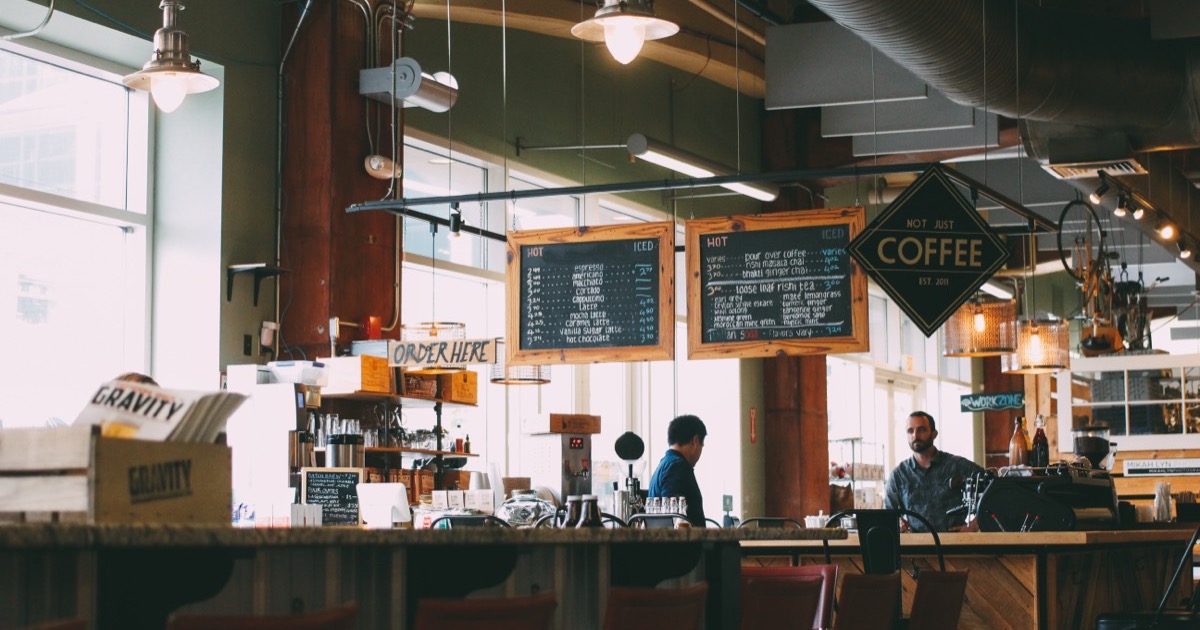
Two things are true about coffee this year, and both sound contradictory. On the world market, prices have been falling from their peak. At the farm gate and at your supplier, what you pay still feels expensive.
The ICO composite indicator price sat at 330.44 US cents per pound in November 2025. By October 2026 it was 261.26 cents, roughly 21 percent lower. Now ask a small café owner on the edge of town: the price of the beans they buy has barely moved.
Coffee prices at the farm level rose around 44.4 percent year on year in 2026 , IDN Times, 2026
Interesting, right? Both numbers are correct, and that is exactly the problem. A small café does not live on an ICO chart. It lives on supplier invoices, electricity bills, and a daily cash figure that has to last until the end of the month.
World prices fell, so why is my coffee still expensive?
There are several layers between "the world price" and "the price per kilo you pay".
The first is contracts and stock. Roasters and suppliers usually buy months ahead, not today. So when world prices drop this month, the price they quote still carries the old purchase price. That is normal, not a conspiracy.
The second is currency and cost. World prices are in dollars, and we pay in rupiah. Logistics, sacks, roastery electricity, and labour do not fall just because the exchange did.
The third is roast loss. A kilo of green beans does not come out as a kilo of roasted beans. There is shrinkage, profile testing, and the occasional failed batch. All of it ends up in the price per kilo.
And the fourth, rarely discussed: the product form. At farm level, coffee can be sold as cherry, dried beans, or green beans, and the prices differ enormously. So a headline saying farm prices rose 44 percent while world prices fell 21 percent can be true in both cases, because they are not measuring the same thing.
The short version: world prices give direction, not a final number. Your final number is on your invoice.
Do the maths per cup, not per kilo
This is the part most of us get wrong, myself included. We panic when the price per kilo moves from IDR 161,500 to IDR 220,000, when what actually decides the margin is the cost per cup.
Take a simple assumption, and it matters that it is stated so you can correct it: one kilogram of beans makes about 55 cups at 18 grams per cup.
IDR 161,500 per kg → about IDR 2,936 per cup
IDR 220,000 per kg → about IDR 4,000 per cup
The difference is about IDR 1,064 per cup
If your café sells 60 cups a day, that difference is about IDR 63,840 a day, or roughly IDR 1.9 million a month. For a small shop, that is not small. But it is also not a reason to raise every menu price by 30 percent.
Retail bean prices today: robusta IDR 200,000–250,000 per kg, arabica IDR 250,000–400,000 per kg for specialty grade — Otten Coffee, 2026
Because that IDR 1,064 only covers the beans. Milk, sugar, cups, ice, and electricity have their own stories.
Six things you can do this week
[CERITA DIO: the first time I faced a bean price increase at my own café — and what I got wrong]
Weigh the dose. Most margin leaks come from inconsistent dosing, not from the bean price. Twenty grams instead of eighteen looks trivial until you multiply it by 60 cups and 30 days. Calibrate the grinder and weigh every shot for a full week to see your real number.
Revisit your blend ratio. If your bestseller is iced coffee with milk, a 70:30 or even 50:50 blend often still works for the customer, at a noticeably lower cost per kilo. That is not quietly lowering quality; it is choosing a flavour profile whose cost makes sense.
Buy together with other cafés. Ten kilos a week gives you no bargaining power. Three cafés ordering 30 kilos from the same roaster can ask for wholesale pricing. Annoying to set up, worth it for months.
Choose which menu carries the weight. Not every item needs a price increase. Find the two or three with the best margin contribution and make sure they stay attractive. Raise prices on items customers are least sensitive to, not on your daily staple.
Add something that isn't coffee. Bread, pastry, or a simple food item has input costs that do not move with coffee. One healthy-margin food item can absorb the bean increase without touching your drink prices.
Tell your customers, once. One line on the menu board or a short post: bean prices went up, we adjusted slightly, here is what we kept the same. Regulars at a small café are usually more understanding than we expect, as long as we are honest and do not raise prices twice in a month.
What not to do
Do not lower quality quietly. Swapping to a cheaper bean without saying anything and hoping nobody notices is the fastest way to lose the customers who come back.
Do not hoard stock because you fear further increases. Cash locked in sacks cannot pay wages, and beans stored too long lose the character you paid for.
Do not cut wages or hours as your first response. It is the most visible saving on the cash sheet, and the fastest way to damage your team and your service.
Closing
Coffee prices will keep swinging. This year they eased from the peak, last year they jumped, and in July 2026 they rose 15.4 percent in a single month, the largest monthly gain since 2021. No small café owner can control that.
Three things you can control: your dose, your menu, and the story you tell your customers. The rest, you follow while keeping the cash alive.
I am not a coffee economist, and the numbers above rest on assumptions that may not match your shop. If something is off, correct me.
Cheers,
Dio Rizkyandita